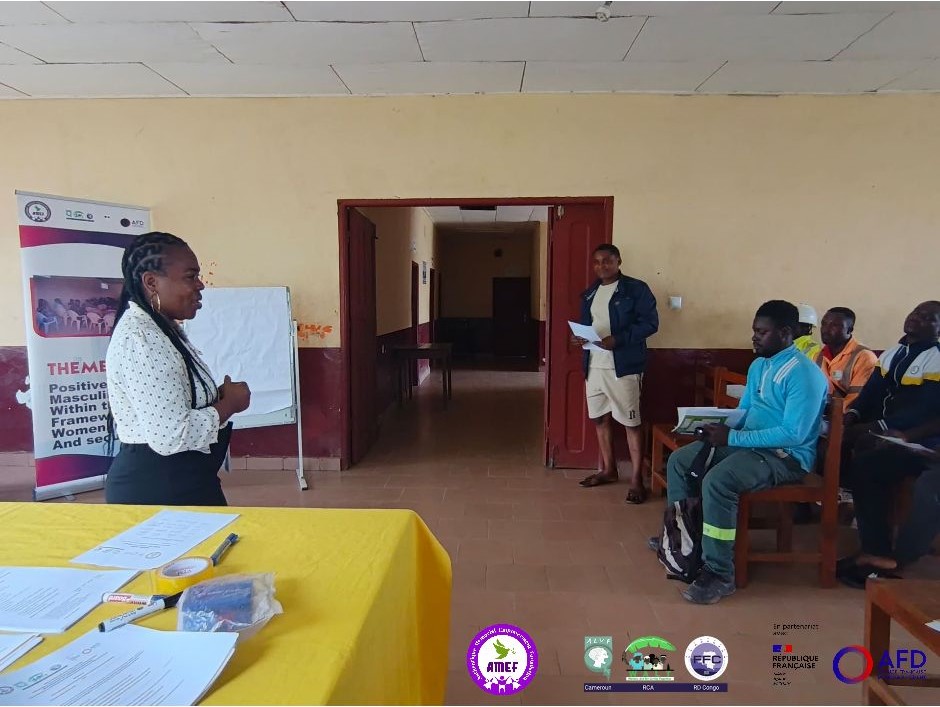
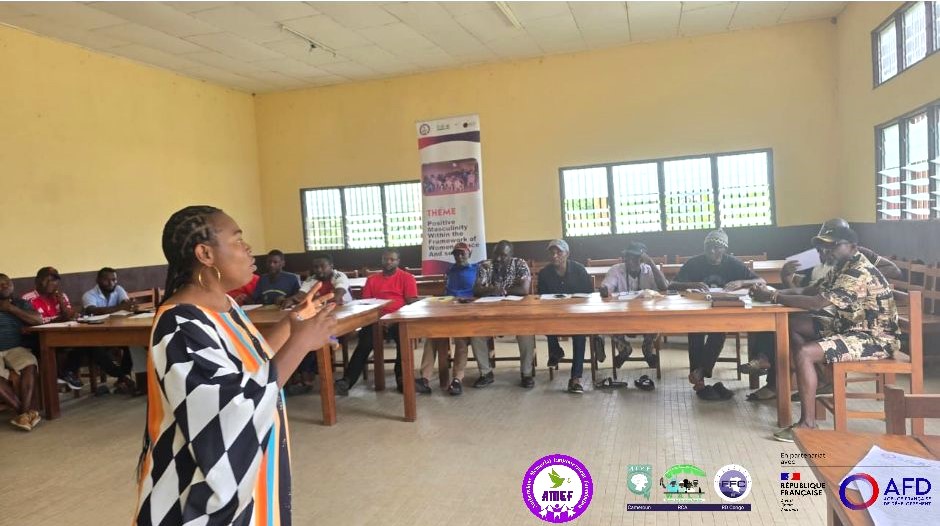
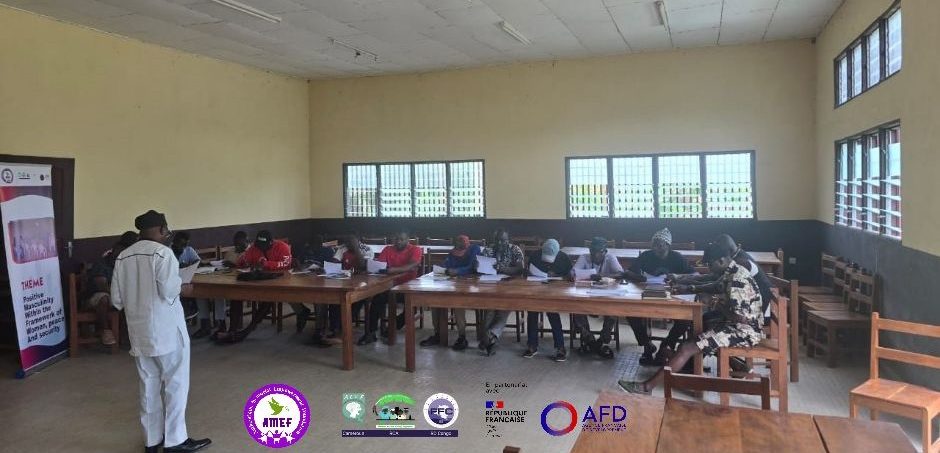
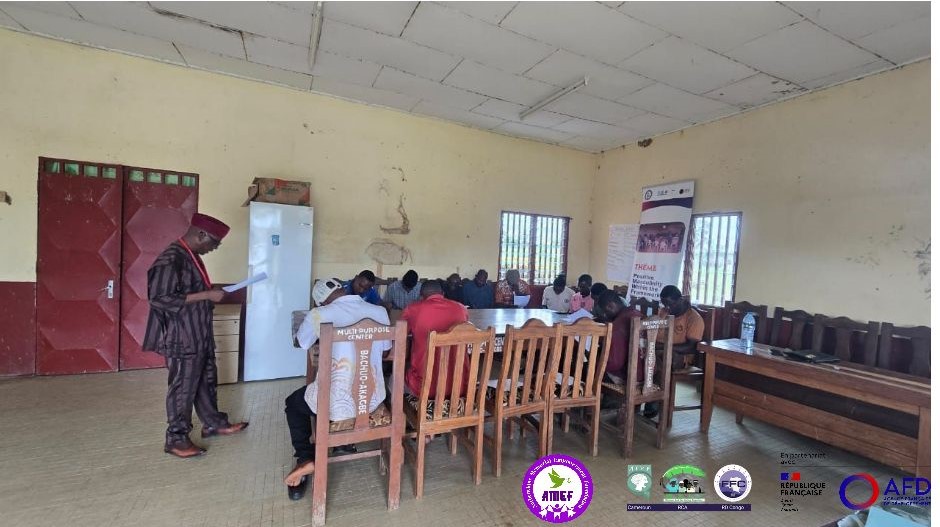
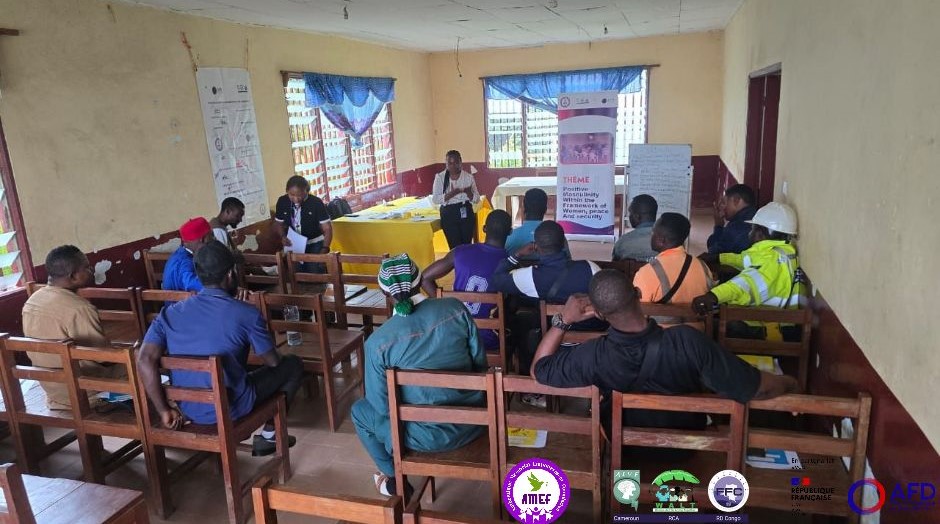
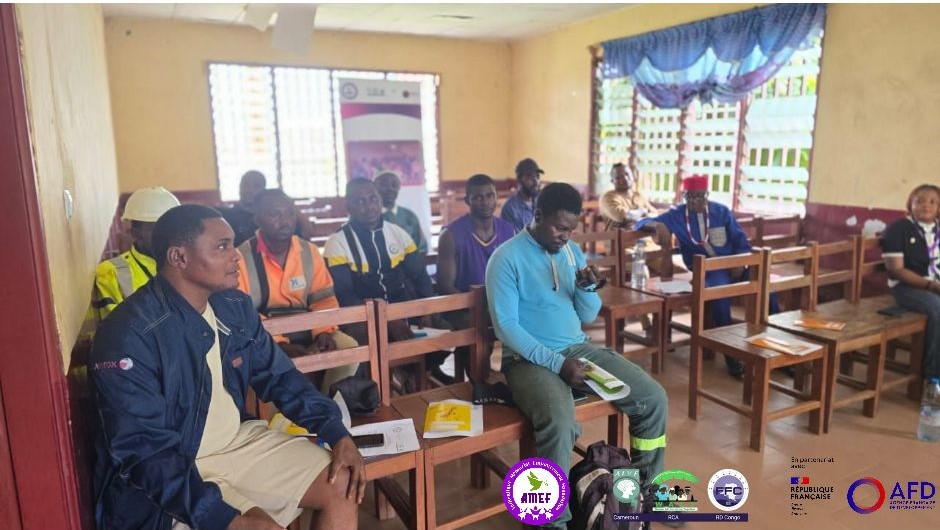
Between July and August 2026, the Executive Director of AMEF, who heads the gender project on Positive masculinity, completed a series of community-based Positive Masculinity trainings across Manyu Division beginning in Mamfe Central 9–11 July, continuing in Eyumojock 23–25 July, and concluding in Bachuo Akaegbe, Upper Bayang 6–8 August. Across the three communities, 45 men took part in three-day sessions designed to open honest conversation about masculinity, power, and protection
A gender protection approach with men at the table
AMEF’s work in Manyu and Meme Divisions is built on a simple but often overlooked premise: protecting women and girls in crisis-affected communities cannot rest on women’s efforts alone. It requires the active participation of men particularly those who hold social influence and decision-making power in their communities.
This training is part of a broader project, implemented with support from ALVF, responding to the urgent protection and gender equality needs of women, girls, and other vulnerable women in crisis-affected Manyu and Meme Divisions. The North-West and South-West regions of Cameroon continue to face a protracted crisis marked by displacement and heightened risks of gender-based violence. Too often, women bear this burden while remaining excluded from the conflict resolution and peacebuilding processes meant to protect them. AMEF’s gender programming exists to close that gap and engaging men directly is central to how it does so.
What the training covered
Facilitated sessions guided participants through the ways traditional expectations of masculinity can, at times, normalise harmful behaviour and offered a healthier alternative grounded in respect, responsibility, effective communication, emotional expression, peaceful conflict resolution, and non-violence. Men were encouraged to see themselves not as bystanders to gender equality efforts, but as active participants with a stake in safer, more stable communities.
Sessions were interactive throughout, with participants sharing personal experiences and challenging long-held assumptions about what it means to “be a man” in their communities.
From reflection to commitment
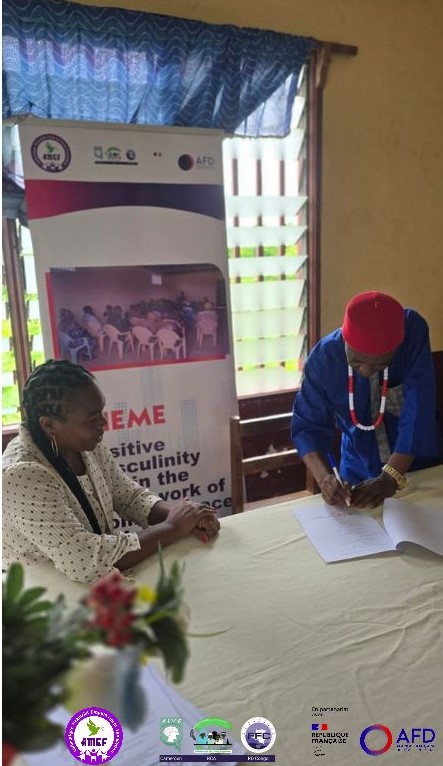
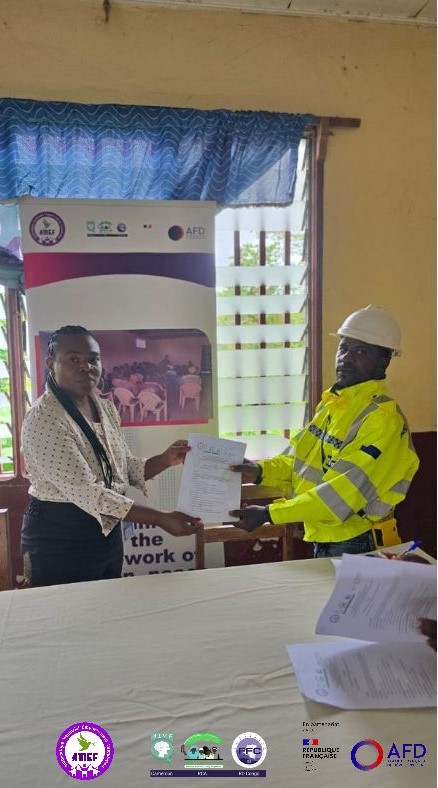
At the close of each session, the shift from discussion to action was made visible. Some participants voluntarily added their names to a commitment banner a personal, public pledge to embody the values discussed. More formally, all 45 men went on to sign a Memorandum of Understanding, committing to serve as active advocates for the protection and participation of women and girls in their own communities. This dual layer of commitment, informal and formal, reflects AMEF’s emphasis on accountability as the natural conclusion of awareness.
Each session was further supported by transportation assistance and refreshments for participants, and documented through attendance sheets, pre- and post-test forms, feedback forms, and payment records reflecting the rigour AMEF brings to its gender and protection programming.
Why this matters
Forty-five men have now completed this training across Mamfe Central, Eyumojock, and Bachuo Akaegbe, each one bound by a signed commitment to advocate for women in their community. The goal to reach 90 strategic male allies by December 2026 is now a reality, embedding a network of men across Manyu and Meme who actively support the protection and participation of women and girls.
This is not a peripheral activity for AMEF, rather it is a demonstration of the organisation’s institutional strength in gender programming in designing interventions that don’t just support women, but transform the environment around them, and hold participants accountable to that transformation, one signature at a time.
AMEF thanks Association de Lutte contre la violence faites aux femmes (ALVF) https://alvfsiege.org/ for its continued support of this project, and every participant across Mamfe Central, Eyumojock, and Bachuo Akaegbe who chose to put their name behind their commitment.
For more than seventeen years, the Authentic Memorial Empowerment Foundation (AMEF) has stood alongside communities in Cameroon’s North-West and South-West regions through […]
VACANCY ANNOUNCEMENT WASH ENGINEER CONSULTANT The Authentique Memorial Empowerment Foundation (AMEF) is a national non-profit organization committed to promoting gender equality, women’s […]
Fill the form
Drop us a line
Fill in this form or send us an e-mail with your inquiry.